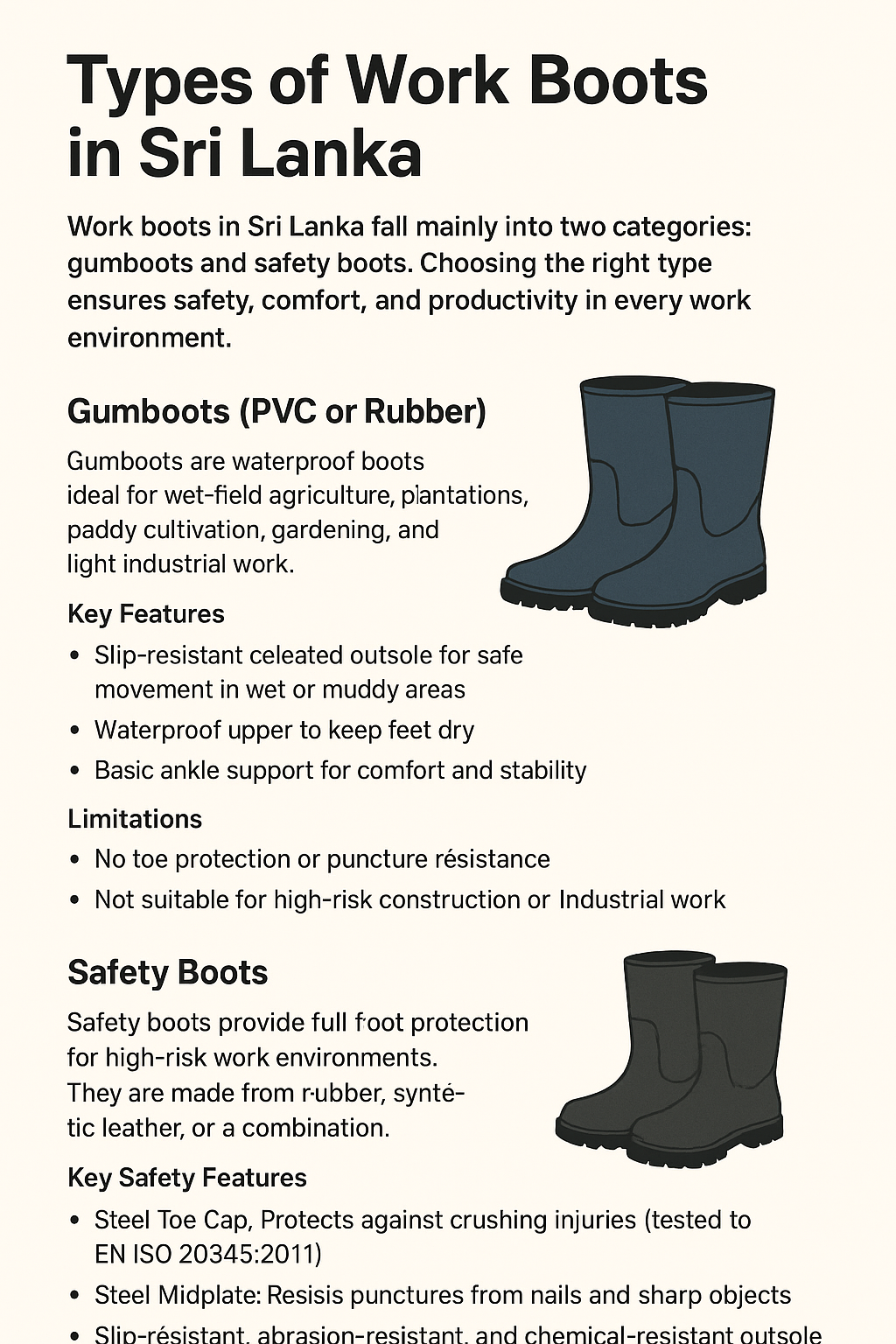
Work boots in Sri Lanka fall mainly into two categories: gumboots and safety boots. Choosing the right type ensures safety, comfort, and productivity in every work environment.
Gumboots (PVC or Rubber)
Gumboots are waterproof boots ideal for wet-field agriculture, plantations, paddy cultivation, gardening, and light industrial work.
Key Features:
Slip-resistant cleated outsole for safe movement in wet or muddy areas
Waterproof upper to keep feet dry
Basic ankle support for comfort and stability
Limitations:
No toe protection or puncture resistance
Not suitable for high-risk construction or industrial work
Safety Boots
Safety boots provide full foot protection for high-risk work environments. They are made from rubber, synthetic leather, or a combination, often including steel toe caps and midplates.
Key Safety Features:
Steel Toe Cap: Protects against crushing injuries (tested to EN ISO 20345:2011)
Steel Midplate: Resists punctures from nails and sharp objects
Slip-resistant, abrasion-resistant, and chemical-resistant outsole
Applications: Construction sites, warehouses, factories, mining, mechanical workshops, and industrial maintenance
Choosing the Right Boot
Gumboots: Best for tasks where waterproofing is essential, like gardening, plantations, and light industrial work
Safety Boots: Necessary where mechanical hazards exist, such as construction sites, factories, or industrial zones
Tip: Even in wet environments, wear safety boots if there is any risk of falling objects or sharp debris
Terminology in Sri Lanka
Naming is inconsistent:
Gumboots: Called rain boots, PVC boots, gumboot normal, or safety boot normal
Safety boots: Called gumboot steel, steel boot, or industrial boot
Rubber boot may refer to PVC boots, adding confusion
Conclusion
Understanding work boots, safety standards, and materials is crucial. Proper knowledge helps reduce injuries, improve comfort and productivity, and avoid confusion. Safe footwear protects workers in plantations, construction sites, factories, and industrial workshops.
How to Choose Work Boots in Sri Lanka – PVC Gumboots & Rubber Safety Boots
September 29, 2025
Publisher:
Featured Blogs

Do You Actually Need a Safety Jacket? The Surprising Benefits of a Simple Cross Belt.
Nov 22, 2025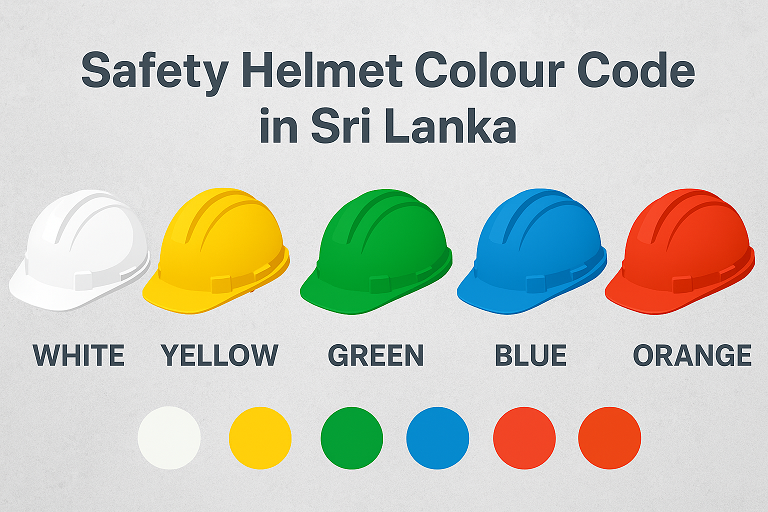
Safety Helmet Colour Code in Sri Lanka: Meaning, Standards, and Site Practices Explained
Oct 22, 2025
Magnum Industrial Safety Is Now Live on Daraz Sri Lanka!
Oct 13, 2025
